The Silent Profit Killer: How Improper Storage and Logistics Are Draining Cannabis Retail Margins
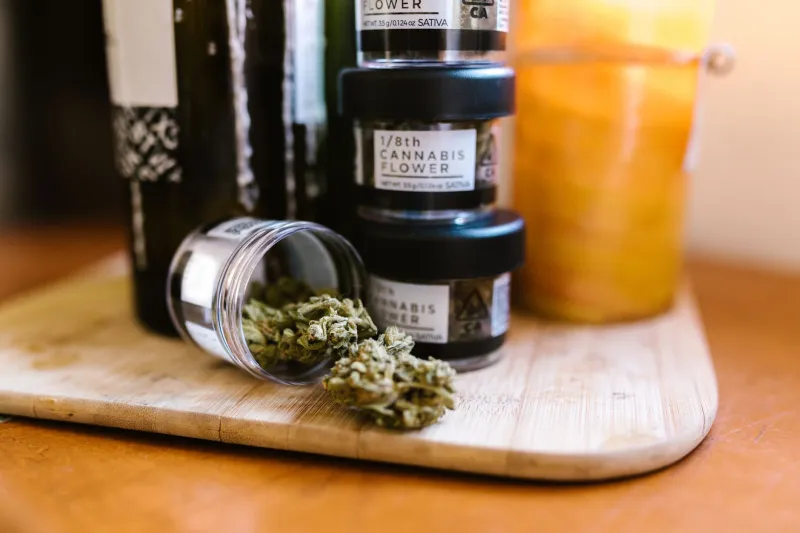
A Loss Hidden in Plain Sight
For cannabis retailers operating in today's competitive legal market, the conversation around profitability tends to focus on licensing fees, tax burdens, and customer acquisition. What often goes unaddressed is a quieter, more corrosive threat: product degradation that occurs long before a sale is ever made.
Industry estimates suggest that cannabis retailers across the United States may be losing upward of 30 percent of their inventory value to spoilage, improper storage conditions, and logistics failures. In a market already squeezed by high operational costs and regulatory complexity, that figure represents a significant and largely preventable drain on the bottom line.
Understanding where this loss originates—and how the supply chain contributes to it—is the first step toward building a more resilient retail operation.
Why Cannabis Products Are Exceptionally Vulnerable
Unlike shelf-stable consumer goods, cannabis products exist in a narrow environmental window. Flower, the most widely sold product category in most state markets, is particularly susceptible to both excess moisture and excessive dryness. Relative humidity levels outside the 55 to 65 percent range can accelerate mold growth on one end of the spectrum or cause terpene degradation and crumbling, unsellable product on the other.
Concentrates present a different but equally demanding set of challenges. Live resin, rosin, and distillate products are sensitive to temperature fluctuation, UV light exposure, and oxidation. Improper handling during transit or extended time on a poorly managed retail shelf can fundamentally alter the consistency, potency, and flavor profile of these high-margin items—often without any visible indication that degradation has occurred.
Edibles and infused products add yet another layer of complexity. Many require refrigeration or at minimum a climate-controlled environment, and their compliance labeling—which in most states must include precise potency figures—becomes legally problematic if the product's integrity has been compromised.
The result is a category of goods that demands a degree of supply chain discipline that many operators have yet to fully implement.
Where the Supply Chain Breaks Down
Spoilage rarely begins at the retail level. In most cases, the conditions that lead to product loss are established far earlier in the supply chain—during cultivation, post-harvest processing, packaging, and distribution.
Cultivators who prioritize volume over controlled drying and curing practices send product downstream that is already compromised. Distributors who lack refrigerated transport capacity or rely on vehicles without climate monitoring expose sensitive products to temperature swings that can span 40 degrees Fahrenheit or more during a single delivery run in states like Arizona, Nevada, or Florida.
Packaging decisions made at the supplier level also carry significant downstream consequences. Inadequate moisture barriers, non-resealable containers, and packaging that offers no UV protection all contribute to accelerated degradation once product leaves the facility. Retailers who receive these goods are, in effect, inheriting a problem they did not create.
For B2B buyers sourcing through cannabis trading platforms, this dynamic underscores the importance of vetting suppliers not just on price and product quality at the point of sale, but on the infrastructure and packaging standards they maintain throughout the production and distribution process.
Compliance Intersects With Quality Preservation
Beyond the financial implications, spoilage and improper storage carry meaningful compliance risk. Most state cannabis regulatory frameworks include provisions governing product integrity, storage conditions, and the sale of degraded goods. In states such as California, Colorado, and Michigan, regulators have issued guidance—or outright enforcement actions—related to mold contamination, inaccurate potency labeling caused by degradation, and the sale of products past their manufacturer-recommended use-by dates.
Retailers found to be selling compromised product face consequences ranging from administrative fines to license suspension. Maintaining proper storage conditions is therefore not merely a best practice for profitability—it is a compliance obligation that should be documented and audited on a regular basis.
This intersection of quality control and regulatory adherence is one reason why supply chain partnerships deserve greater scrutiny. When a retailer selects a supplier or distributor through a B2B cannabis marketplace, they are not simply making a procurement decision. They are also assuming a degree of shared accountability for how that product was handled before it arrived on their shelves.
Practical Solutions for Retailers
Addressing inventory spoilage requires action at multiple points in the retail operation.
Invest in proper storage infrastructure. Dedicated cannabis storage should include humidity-controlled environments for flower, refrigerated or temperature-stable units for concentrates and infused products, and UV-blocking storage for light-sensitive items. The upfront cost of appropriate shelving and climate control equipment is almost always recouped through reduced product loss within a single quarter.
Establish receiving protocols. Retailers should implement a formal intake process that includes temperature logging, visual inspection, and packaging integrity checks at the point of delivery. Products that arrive outside acceptable parameters should be flagged, documented, and addressed with the distributor before they enter active inventory.
Prioritize suppliers who invest in cold-chain logistics. When evaluating wholesale partners, ask directly about their distribution infrastructure. Do they use temperature-monitored vehicles? What packaging standards do they apply to flower and concentrates? Do they provide humidity indicator cards or data loggers with shipments? Suppliers who can answer these questions with specificity are demonstrating a level of operational maturity that reduces downstream risk.
Rotate inventory systematically. A first-in, first-out inventory management discipline is standard practice in food retail but inconsistently applied in cannabis. Implementing FIFO protocols, combined with clear expiration tracking in your point-of-sale system, can meaningfully reduce the volume of product that ages past its optimal window.
Reduce order quantities and increase order frequency where feasible. Carrying less inventory on hand at any given time limits exposure to spoilage. For retailers with access to reliable wholesale partners through a cannabis B2B platform, smaller and more frequent orders can replace the large, infrequent bulk purchases that leave product sitting in storage for extended periods.
A Supply Chain Issue Requiring a Supply Chain Solution
The 30 percent spoilage figure is not inevitable. It is a reflection of an industry that scaled rapidly without always building the logistical infrastructure to match. As the legal cannabis market matures and competitive pressure intensifies, the operators who treat inventory integrity as a core business priority—rather than an afterthought—will carry a measurable advantage.
For retailers, that means demanding more from the suppliers and distributors they choose to work with. Platforms that facilitate transparent B2B sourcing give buyers the leverage to make those demands and the visibility to act on them. In a market where margins are already thin, the difference between a supplier who protects product quality and one who does not may ultimately be the difference between a profitable retail operation and one that is quietly hemorrhaging inventory with every delivery.