Chasing Control: The Hidden Costs of Backward Integration for Cannabis Retailers
For many cannabis retailers, the appeal of controlling their own supply chain is intuitive. Wholesale prices fluctuate. Suppliers miss delivery windows. Product quality varies batch to batch. When these frustrations compound, the idea of growing your own flower or operating your own distribution arm begins to feel less like an ambition and more like a rational business decision.
In practice, however, backward integration — the process of a retail operation expanding upstream into cultivation, processing, or wholesale distribution — has proven to be one of the more consequential strategic miscalculations in the legal cannabis industry. The businesses that have succeeded at it share a narrow set of characteristics. Those that failed often did so quietly, absorbing losses across multiple license categories before acknowledging that the original retail operation had suffered for it.
The Regulatory Layer Most Retailers Underestimate
Before the financial modeling begins, there is a compliance reality that reshapes the entire calculus. In most legal states, each tier of the cannabis supply chain — cultivation, processing, distribution, and retail — operates under a distinct license category, each carrying its own application costs, renewal fees, facility inspections, and operational requirements.
A California retailer pursuing a Type 1A cultivation license, for example, must contend with local land use approvals, state Department of Cannabis Control review, Bureau of Cannabis Control requirements where applicable, and in many jurisdictions, a conditional use permit process that can run twelve to eighteen months before a single plant is in the ground. The licensing fees alone can reach tens of thousands of dollars annually, and that figure does not include the cost of legal counsel, compliance consultants, or the staff time required to maintain ongoing regulatory documentation across multiple license types.
The compliance burden does not simply add cost — it adds organizational complexity. Retail staff trained in point-of-sale operations, customer service, and inventory management are not interchangeable with cultivation or distribution personnel. Each upstream function introduces new training requirements, new regulatory reporting obligations, and new exposure to enforcement action that could, in some states, jeopardize the retail license itself if a violation occurs at the cultivation or distribution tier.
Capital Deployment and Opportunity Cost
Facility buildout represents the second major financial shock for retailers who pursue vertical integration without adequate preparation. A small indoor cultivation operation in a compliant commercial space — accounting for HVAC infrastructure, lighting systems, irrigation, security, and buildout to meet state facility standards — routinely requires between $500,000 and $2 million in upfront capital before the first harvest cycle is complete.
For a mid-sized single-location retailer generating $3 million to $5 million in annual revenue, that capital commitment is not trivial. It represents funds that might otherwise have been deployed toward inventory optimization, point-of-sale technology, staff training, or expansion into an additional retail location — investments with shorter payback periods and lower regulatory risk profiles.
The opportunity cost question is one that many retailers fail to model rigorously. When capital is finite, as it is for most cannabis businesses operating in a sector still largely excluded from conventional bank financing, every dollar committed to a cultivation buildout is a dollar unavailable for core retail growth. The retailers who have navigated backward integration most successfully are those who secured dedicated capital for upstream operations, ring-fenced from retail operating funds, rather than drawing down the working capital that retail operations depend on for day-to-day inventory procurement.
Case Profiles: Where Integration Worked and Where It Didn't
Among the cases where backward integration created genuine value, a common pattern emerges: the retailer in question had an existing relationship with a cultivation or processing operation — often a founder with prior experience in that tier — and was expanding into retail as a secondary move, rather than the reverse. In these instances, the retail license was added to an already-functioning upstream business, and the operational expertise was already present.
Contrast that with the more common scenario: a successful dispensary operator in a competitive urban market who, frustrated by inconsistent wholesale pricing, invests in a cultivation facility in a rural county. Without cultivation expertise on the leadership team, without established relationships with master growers, and without the infrastructure knowledge to manage an agricultural operation, the facility underperforms through its first two harvest cycles. Yields fall short of projections. Compliance failures at the cultivation site trigger a state audit. The retail operation, meanwhile, experiences inventory gaps because management attention has migrated upstream.
This pattern has played out across multiple states, and the specific details vary only in scale. The underlying failure mode is consistent: retail expertise does not transfer to cultivation operations, and the assumption that business acumen alone can bridge that gap has proven costly.
The Distribution Tier: A Slightly Different Calculation
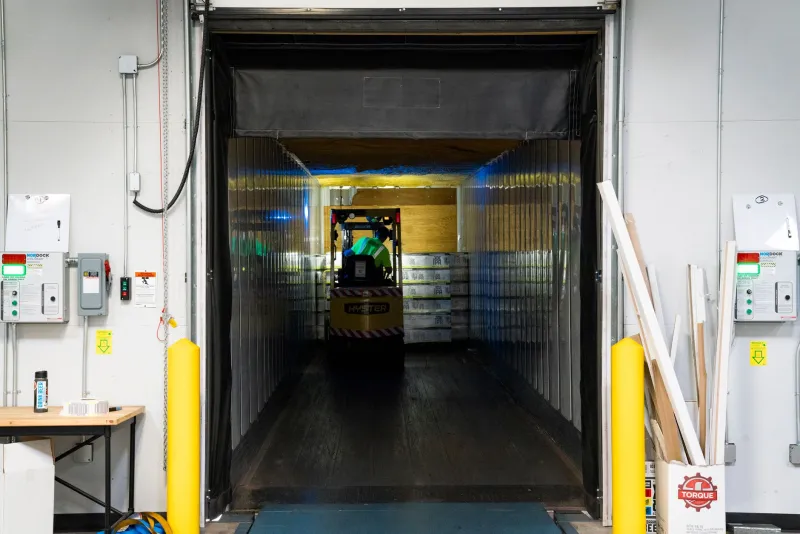
For retailers exploring backward integration into distribution — rather than cultivation — the dynamics shift somewhat, though the core challenges remain. Distribution licenses in states like California and Illinois require dedicated vehicles, driver compliance protocols, manifest documentation, and in some cases, bonded warehousing. The regulatory requirements are substantial but are arguably more manageable for a retailer with existing logistics competency.
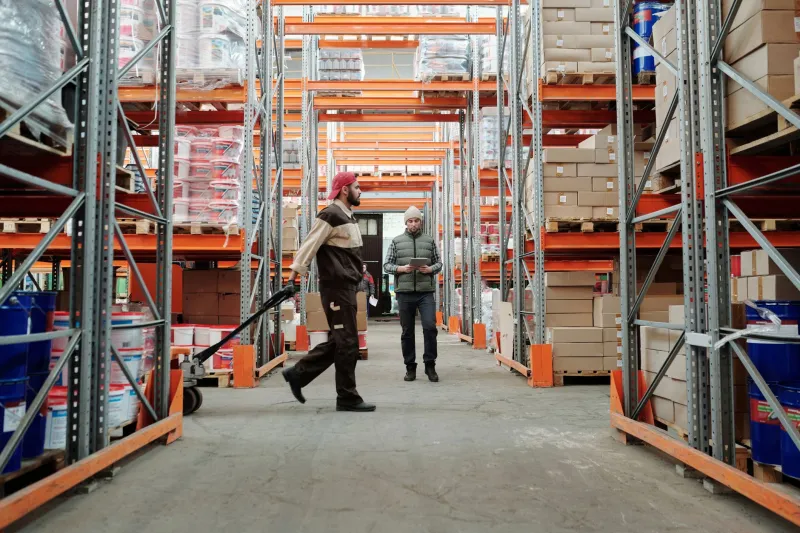
Where distribution integration has shown the clearest return is in markets where a retailer operates multiple locations within a single state and can justify the fixed costs of a compliant distribution operation across sufficient volume. A retailer running five to eight dispensaries in adjacent markets, moving significant inventory between locations and to event activations, may find that in-house distribution reduces per-unit logistics costs meaningfully over time.
For single-location retailers, the math rarely pencils out. The fixed costs of maintaining a compliant distribution license — vehicles, personnel, insurance, regulatory fees — are difficult to amortize across the volume of a single store.
A Decision Framework for Retailers Evaluating Upstream Expansion
Before committing capital or initiating a license application, retailers considering backward integration should apply a structured evaluation across four dimensions:
Operational expertise: Does the leadership team include individuals with direct, hands-on experience in the upstream tier being considered? If not, what is the realistic cost and timeline for acquiring that expertise?
Capital isolation: Is the proposed upstream investment funded through capital that is genuinely separate from retail working capital? Can the retail operation sustain its current performance if the upstream venture underperforms for twelve to eighteen months?
Regulatory exposure: In the relevant state, does a compliance failure at the cultivation or distribution tier create material risk to the retail license? What is the enforcement posture of the state agency overseeing that tier?
Volume justification: Does the retailer's current and projected purchase volume from the upstream tier justify the fixed costs of owning and operating that tier? At what volume does the integration break even versus continued wholesale procurement?
For most single-location and early-stage multi-location retailers, an honest application of this framework will point toward optimizing existing supplier relationships rather than pursuing upstream ownership. Negotiating improved wholesale terms, diversifying across a broader supplier base, and leveraging platforms that provide real-time inventory visibility often deliver margin improvement at a fraction of the cost and risk that vertical integration entails.
When the Supply Chain Is the Problem — and When It Isn't
Perhaps the most important reframe for retailers considering backward integration is this: supply chain frustration is frequently a symptom of relationship and information gaps rather than a structural problem that only ownership can solve. Inconsistent product quality from a single supplier is a procurement diversification problem. Unpredictable pricing is a contract structure problem. Late deliveries are a logistics management problem.
Each of these challenges is addressable through better supplier selection, improved contract terms, and stronger operational discipline — without the capital commitment, regulatory complexity, and organizational distraction that upstream ownership introduces.
The retailers who thrive in this industry over the long term are those who remain disciplined about where their genuine competitive advantage lies. For most, that advantage lives in customer experience, product curation, and local market knowledge — not in cultivation canopy or distribution manifests.
Vertical integration is not inherently wrong. But it is rarely the first answer to a supply chain problem, and for most cannabis retailers, it should not become the default one.